Five Reflections on Studying Gilbert Strang's Linear Algebra
The books, the exercises, and the legendary MIT lectures — what I wish I had known going in.
Aug 09, 2026
In my 2025 year-end reflections, I wrote about turning back to mathematics as something solid to hold onto in an uncertain world. Linear algebra is where I chose to begin, and the books and MIT lectures of Gilbert Strang became my companions. After months of working through them, here are five reflections I want to pass along to anyone walking the same path.
1. His learning style is not for everyone
Strang teaches by intuition, geometry, and example — not through the strict definition → theorem → proof → Q.E.D. chain. If, like me, you were shaped by the Chinese education system, where rigor and formal proof are prized above all else, his loose, conversational style can feel almost imprecise at first.
That feeling is worth naming before you begin rather than halfway through. If a proof-first approach is what you need for a result to feel truly "earned," Strang may frustrate you more than he inspires you. He is simply not your first choice — and that is an entirely fine thing to admit up front.
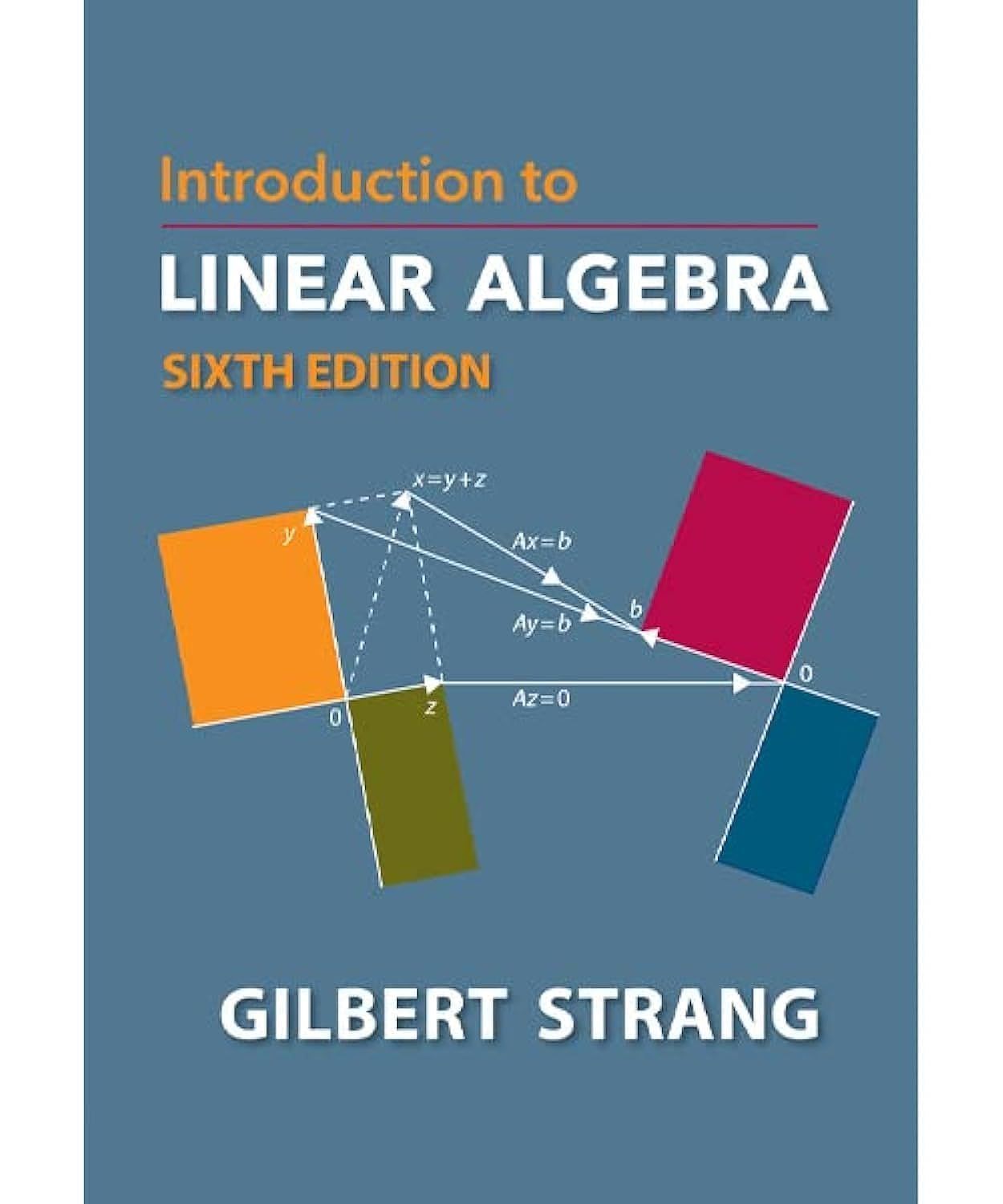
2. Start with Introduction to Linear Algebra
If your goal is to genuinely master classical linear algebra — vectors, matrices, the four fundamental subspaces, determinants, eigenvalues, the SVD — start with Introduction to Linear Algebra. It is the center of gravity of his entire body of work, and nearly everything else he writes quietly assumes you already know what is in it.
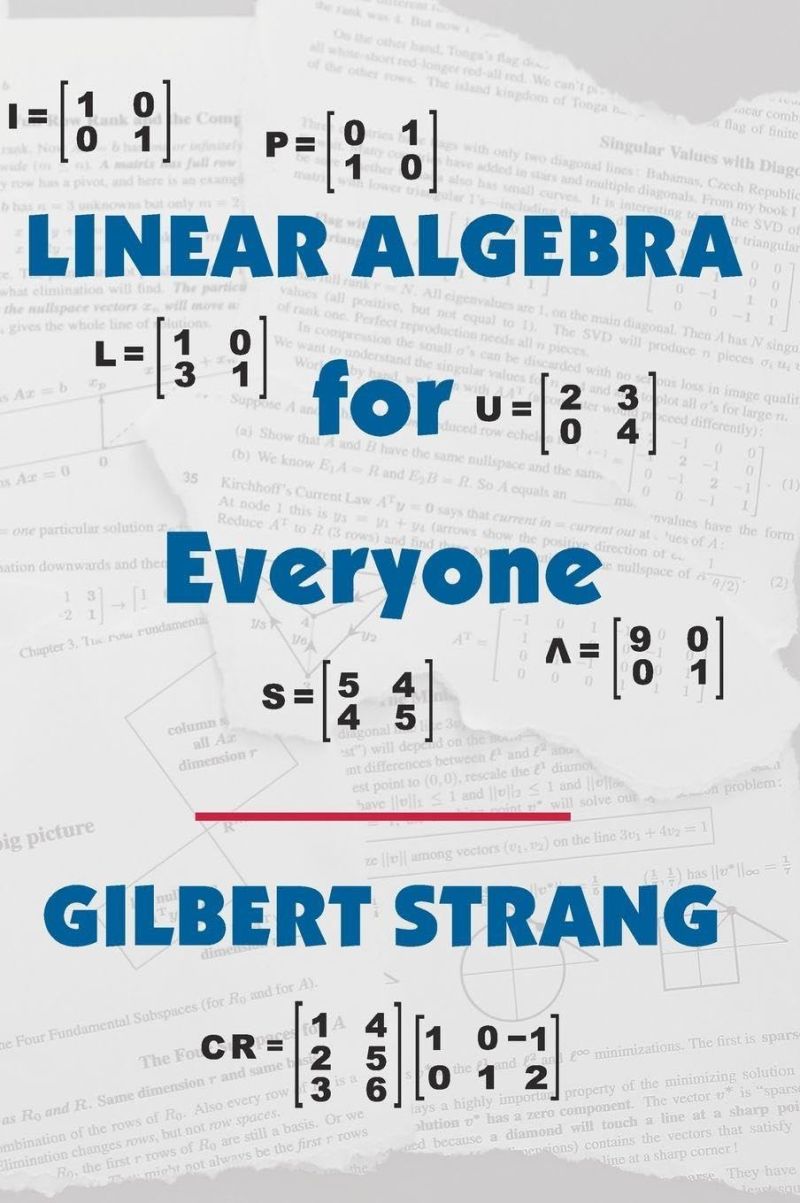
3. Don't be misled by Linear Algebra for Everyone
The title Linear Algebra for Everyone is genuinely misleading — at the very least, it misled me. I picked it up expecting a gentler on-ramp, and it is not the best place to start.
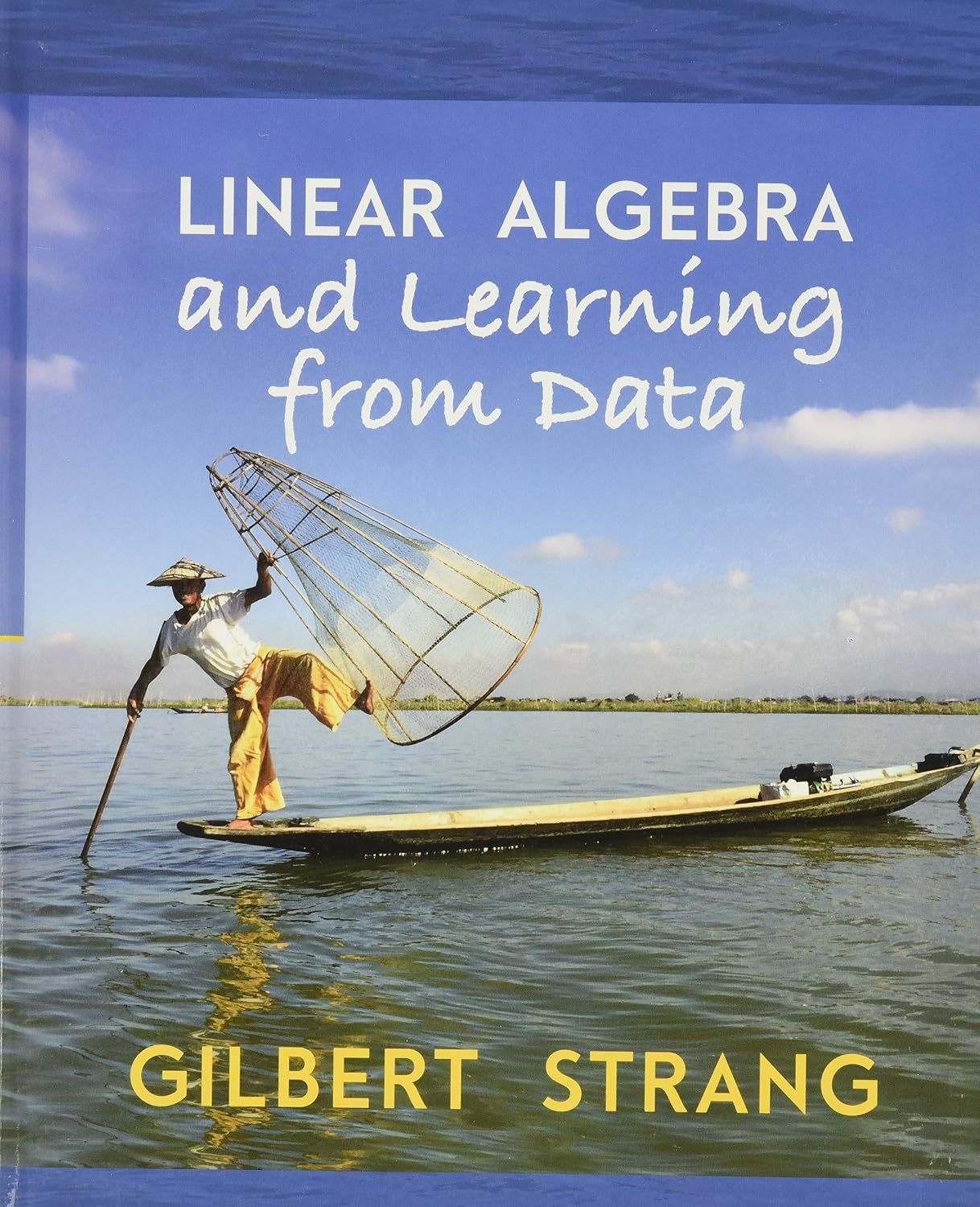
Here is my specific advice: read it only as far as Section 7.1 (the SVD), and then stop. At that point, switch directly to Linear Algebra and Learning from Data and read it from the very beginning — do not skip ahead. That book is a remarkably efficient review of all the core concepts you have just learned, and, crucially, it then turns around and walks you straight into modern deep learning, neural networks, and machine learning. It is the bridge from "classical linear algebra" to "the math that makes AI work," and it is worth crossing deliberately.
 →
→
4. Do not skip the exercises
This is the one I almost got wrong. It is tempting to read Strang's prose, nod along, and move on — his writing has a way of making everything feel obvious. But almost every problem he designs is more than a mechanical calculation. Each one is built to carry a deeper mathematical meaning, and working through them is where the actual understanding happens. A chapter read without its exercises is a chapter half-read.
5. The MIT lectures are a masterclass in teaching
Professor Strang is a legendary educator, and two things make his MIT lectures — freely available on YouTube — extraordinary.
First, he likes to hide puzzles in the most unnoticeable corners: a stray number, an offhand comment, a matrix drawn just slightly differently. He rewards the student who notices.
Second, he is a performer. The pacing is perfect. Every pause, every stutter, every apparent "mistake" on the chalkboard is deliberate — choreographed to slow you down and push you toward independent thinking. Watch actively, chalk in hand, and you will see exactly what I mean.